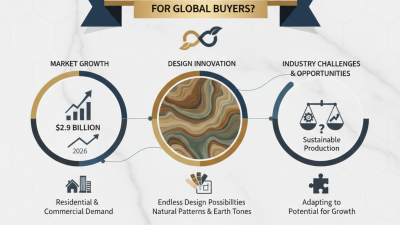
In the fast-changing world of industrial materials, Patagonia Quartz has really made a name for itself. I mean, experts like Michael Chen, who's pretty well-known in the quartz scene, often say that it’s all about quality and innovation when it comes to leading companies in this space. That really hits home, especially now when manufacturers are feeling the pressure to keep up with what consumers want.
People tend to trust Patagonia Quartz because it’s top-notch in terms of quality and durability. It’s used everywhere — from countertops to flooring — and honestly, it’s become pretty much a go-to. Plus, with everyone talking about sustainability these days, manufacturers are actually trying to source their materials more eco-friendly, so they’re not just chasing quality but also trying to be environmentally responsible.
But, of course, it’s not all smooth sailing. Staying innovative all the time can get pretty tricky and sometimes slow down production. Companies need to stay on top of new tech and market trends if they wanna keep up. As Patagonia Quartz gets even more popular, manufacturers are really being pushed to reflect on what they’re doing and find ways to up their game in quality assurance. The journey to perfecting Patagonia Quartz is far from over — there are plenty of chances for growth, but also some hurdles to jump over along the way.

Overview of the Quartz Industry in China: Market Trends and Projections
The quartz industry in China has seen significant transformation recently. The market is shifting toward high-quality materials, with manufacturers focusing on sustainable practices. This trend reflects a growing consumer demand for eco-friendly products. Chinese manufacturers are adopting advanced technologies to ensure better quality and efficiency.
However, challenges remain. Some manufacturers struggle with quality control and consistency. The lack of standardized regulations can lead to product variations, affecting consumer trust. Additionally, competition is fierce, with many players vying for market share. Emerging companies must find their unique value propositions to stand out.
Market projections suggest steady growth in the coming years. Increasing urbanization and construction projects drive demand for quality quartz. Industry leaders are urged to invest in research and development. This investment will enable them to innovate and respond to market needs better. A focus on training skilled labor will also play a crucial role in the industry's future success.
Key Players in the Patagonia Quartz Manufacturing Sector in 2026
In 2026, the Patagonia quartz manufacturing sector is evolving rapidly. Key players in this industry are focusing on sustainable production methods. Many companies are integrating eco-friendly practices into their manufacturing lines. They recognize the importance of responsible sourcing and environmental consciousness. The demand for the best patagonia quartz continues to grow, driven by consumers' preference for quality and sustainability.
Several manufacturers are emerging as leaders. They offer high-grade Patagonia quartz that meets strict quality standards. These manufacturers focus on innovation, improving both product performance and aesthetic appeal. However, challenges remain. Maintaining quality while scaling production poses a dilemma for many. Some companies struggle with consistency in their output, which can affect customer trust.
Collaboration within the industry is crucial for progress. By sharing best practices, manufacturers can enhance their processes. This collaboration could also address supply chain issues. Transparency in sourcing materials is becoming a vital expectation. In this competitive landscape, adaptability and commitment to quality will distinguish the best Patagonia quartz producers from the rest. The future looks promising, yet it demands persistent efforts and reflection on improvement.
2026 Top China High Quality Patagonia Quartz Manufacturers Overview
Quality Standards and Certifications for High-Quality Quartz Products
In the quest for high-quality quartz products, understanding quality standards is essential. Manufacturers must comply with various certifications that ensure product integrity and safety. The ISO 9001 certification, for instance, is crucial. It indicates a manufacturer's commitment to quality management systems. Compliance with such standards fosters trust in the market.
Another important certification is the NSF certification. This assures consumers that the product meets public health and safety requirements. High-quality quartz should also comply with environmental regulations. Materials must be sourced responsibly and processed without harmful chemicals. Reflecting on these certifications highlights the need for constant improvement in manufacturing practices.
Quality control protocols are vital at each production stage. Regular testing of raw materials ensures consistency in product quality. Companies should be open to audits and evaluations by independent bodies. A proactive approach to quality standards not only builds credibility but also protects consumers' interests. Manufacturers need to continually adapt to evolving regulations to stay competitive.
Technological Advancements in Quartz Manufacturing: Innovations and Impact
The quartz manufacturing industry is witnessing rapid technological advancements. These innovations are reshaping production processes significantly. The global quartz market is projected to reach over $10 billion by 2026. This growth is driven by increased demand for Engineered Stone products in architecture and construction.
New manufacturing techniques are emerging, allowing for greater precision and efficiency. For instance, the introduction of automation has improved output rates and reduced human error. A recent report indicates that automated systems can enhance production speed by up to 30%. This shift not only lowers costs but also increases quality consistency.
However, challenges persist. Many manufacturers struggle with integrating these technologies effectively. There is a learning curve that requires continuous training. It's crucial to address these gaps to fully benefit from advancements. Companies often find themselves investing in equipment without a clear plan for staff adaptation. Building a skilled workforce remains critical for sustaining growth in this booming sector.
Sustainability Practices in Quartz Production: Environmental Considerations
Sustainability in quartz production is crucial for the environment. Manufacturers are exploring eco-friendly practices. china patagonia quartz producers face pressure to minimize their carbon footprint. Sustainable sourcing of raw materials is one approach. Using recycled materials can reduce waste significantly.
Water usage is another significant concern. Quartz production can be water-intensive. Companies are encouraged to adopt recycling systems. This helps in conserving water while maintaining production levels. Some manufacturers have made strides, but others still rely on outdated methods. It's a call for improvement.
Energy consumption is also a major factor. Some factories use renewable energy sources, while others don't. This difference can greatly affect overall sustainability. Transparency in operations is essential. Consumers prefer products from companies that prioritize the planet. Awareness of environmental impacts is growing within the industry.
Export and Import Dynamics of Chinese Patagonia Quartz Products
The dynamics of importing and exporting Patagonia quartz products in China are quite intriguing. The market shows steady growth, driven by rising demand for high-quality quartz. As a result, manufacturers are focusing on improving their production processes. This shift aims to meet the global standards necessary for successful trade.
But challenges remain. Many exporters face obstacles in navigating international trade regulations. Understanding these regulations is critical. Missteps can lead to significant delays or financial losses. Additionally, raw material sourcing poses a challenge. Ensuring a consistent quality of quartz is essential for wholesale patagonia quartz. Any fluctuation in quality can undermine buyer trust.
Emerging trends point to a stronger emphasis on sustainable practices. Manufacturers are exploring eco-friendly methods to extract and process quartz. Transparency in sourcing is becoming a priority for many businesses. Customers increasingly demand these practices. Overall, the landscape is evolving, but there is still work to be done.
Future Market Predictions: Growth Opportunities and Challenges in Quartz Industry
The quartz industry in China is poised for significant growth. This growth is driven by rising demand across multiple sectors, including construction and electronics. Manufacturers are focusing on high-quality, sustainable options. custom patagonia quartz products are gaining traction with consumers seeking unique designs and durability. The increasing awareness of eco-friendly materials is pushing companies to innovate.
However, several challenges remain. Intense competition exists among manufacturers, leading to pricing pressures. Additionally, supply chain disruptions can hinder production efficiency. Companies must adapt to changing consumer preferences for customization. The blend of quality and sustainability is essential for success. Finding the right balance may require ongoing research and investment in technology.
Market predictions indicate that while the quartz industry holds promise, navigating the landscape is complex. Entrepreneurs need to stay informed of trends and consumer demands. Adapting to change is vital for long-term growth. Fostering relationships with reliable suppliers can enhance stability. Engaging in continuous improvement will be necessary for manufacturers aiming for leadership in this dynamic market.
FAQS
: ISO 9001 certification shows a manufacturer's dedication to quality management systems.
NSF certification assures products meet health and safety requirements for consumers.
Sustainability practices help reduce environmental harm and improve resource management.
Water usage is a major concern; production can be very water-intensive.
Factories using renewable energy are more sustainable than those relying on traditional energy sources.
Transparency builds consumer trust and demonstrates a commitment to sustainable practices.
Exporters often struggle with navigating international trade regulations, risking delays or losses.
Regular testing of raw materials and careful sourcing are key to maintaining quality.
There is an increasing focus on sustainability and eco-friendly production methods.
Some companies embrace audits for credibility, while others may resist due to concerns.
Conclusion
The article provides a comprehensive overview of the quartz industry in China, focusing on the Patagonia Quartz manufacturing sector. It highlights market trends and projections for 2026, which indicate a robust growth trajectory underscored by key players contributing to the industry’s expansion. The discussion includes quality standards and certifications critical for high-quality quartz products, ensuring that manufacturers meet international expectations.
Additionally, the article examines technological advancements in quartz manufacturing, showcasing innovations that enhance production efficiency and product quality. Sustainability practices are also addressed, emphasizing the importance of environmental considerations in quartz production. The dynamics of export and import further underscore the global implications of the Chinese Patagonia Quartz market, while future predictions highlight both growth opportunities and potential challenges, positioning stakeholders to navigate this evolving landscape effectively.


 Contact
 vito@vemystone.com